Head & Neck Oncology
Oral cancer: understand your next step.
Whether you have noticed a change in your mouth or received a diagnosis, you deserve to understand what it means and what can happen next.
Dr. Abhishek Kumar Verma · Surgical Oncologist · Lucknow
A symptom does not automatically mean cancer. Persistent or unusual changes deserve assessment so that the cause can be identified and appropriate care arranged.
What does oral cavity cancer mean?
The oral cavity is the mouth: the lips, inner cheek lining, gums, floor of the mouth under the tongue, front two-thirds of the tongue, hard palate and the small area behind the last lower molars. Most cancers here start in the lining cells and are called squamous cell cancers.
The tonsils and base of the tongue belong to the oropharynx; the voice box is the larynx. These are other head and neck sites with different assessments and treatment choices. This guide focuses on the oral cavity.
Step 1 · Recognise the signs
What changes in your mouth should you notice?
Oral cancer can present in different ways. Many of these symptoms also have non-cancerous causes, but persistent changes should not be ignored.
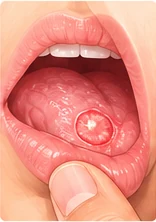
A mouth ulcer that does not heal
An ulcer or sore that persists, particularly beyond two weeks, should be assessed.
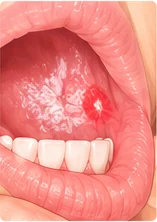
A red or white patch
A persistent red or white patch inside the mouth needs examination.
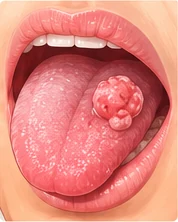
A lump or thickened area
A new lump or unusual thickening in the mouth or lip should be checked.

Difficulty chewing or swallowing
Persistent difficulty moving food, chewing or swallowing needs evaluation.
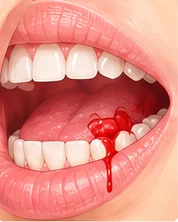
Unexplained bleeding or numbness
Unusual bleeding, persistent pain or numbness in the mouth or lip needs assessment.

A persistent neck lump
A new or persistent lump in the neck should be examined, even if it is painless.
Restricted mouth opening
Increasing difficulty opening the mouth, especially with supari or gutkha use, needs assessment. It can have several causes, including oral submucous fibrosis.
Illustrations are examples only. A concerning change may look different; pictures cannot confirm or rule out cancer.
When should you seek assessment?
Arrange a medical or dental assessment for an ulcer that persists beyond two weeks, a persistent red or white patch, an unexplained lump or any progressive difficulty with chewing, swallowing or opening your mouth. Seek urgent care for significant bleeding or breathing difficulty.
Step 2 · Understand the risks
What increases the risk of oral cancer?
Understanding risk factors can support prevention, but they cannot confirm or exclude a diagnosis.

Smokeless tobacco
Chewing tobacco, khaini and tobacco-containing gutkha increase oral cancer risk.

Smoking
Smoking increases oral cancer risk, especially when combined with alcohol use.

Areca nut and supari
Areca nut (supari), including in betel quid, increases oral cancer risk even without tobacco.

Alcohol use
Alcohol can further increase risk, particularly when combined with tobacco.
Avoiding tobacco, gutkha and areca nut is an important step toward reducing risk. Do not delay assessment of a suspicious lesion while trying home remedies.
Step 3 · Know the process
How is oral cancer diagnosed?
The diagnostic plan depends on the findings during examination. Not every person needs every investigation.
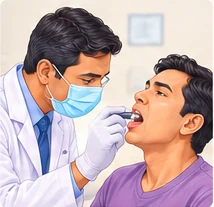
Clinical examination
The doctor examines the mouth, tongue, cheeks, gums and neck, and asks about symptoms and risk factors.
Biopsy when indicated
A tissue sample is examined under a microscope to establish whether cancer is present.

Imaging and staging
CT, MRI or other investigations may be advised to assess the extent of disease and guide treatment.
What does the biopsy tell you?
Histopathology helps establish the diagnosis and type of lesion. Further investigations help determine the extent of disease and guide treatment planning. Your doctor will explain which tests are appropriate for your case.
Step 4 · Explore your options
How is oral cancer treated?
Treatment is individualised according to the site and stage of the cancer, pathology, general health and the patient's circumstances.

Surgery
Surgery is commonly the main treatment for operable oral cavity cancer. The tumour is removed with a surrounding margin of tissue; the extent depends on its location and spread.
Reconstruction
After tumour removal, some wounds can be closed directly. Others need tissue transferred from nearby or elsewhere in the body (a flap), sometimes including bone. Reconstruction supports healing, appearance, speech and swallowing; it is not a separate alternative to cancer removal.

Radiotherapy
Radiotherapy may be advised after surgery to reduce the risk of cancer returning. In selected situations it can be part of a non-surgical plan. The recommendation depends on the diagnosis, pathology and fitness for treatment.

Systemic treatment
Chemotherapy may be combined with radiotherapy for selected patients. Immunotherapy or other medicines may be used in recurrent or advanced disease, depending on tumour features, prior treatment and overall health.
Why might neck nodes need treatment?
Cancer cells can travel to lymph nodes in the neck. A neck dissection removes selected groups of nodes when spread is found or the risk of hidden spread warrants treatment, even without a visible lump. In selected early cancers, sentinel lymph-node biopsy may be an option at experienced centres. The plan depends on the tumour and node assessment.
What decides treatment after surgery?
The final pathology report checks the tumour, cut edges (margins) and lymph nodes. Depending on these findings, further surgery, radiotherapy or chemoradiotherapy may be discussed. Cancer at a margin or extending outside a lymph node can change the recommendation. Not everyone needs additional treatment; benefits and fitness are reviewed by the team.
The most suitable treatment cannot be determined from symptoms alone. A confirmed diagnosis and appropriate staging are important before finalising a treatment plan.
Step 5 · Know what comes next
Your treatment journey, step by step
Knowing the broad sequence can make consultations and decisions easier to prepare for.
First consultation
Discuss symptoms, medical history and previous reports with your doctor.
Confirm the diagnosis
Complete the examination, biopsy and investigations recommended for your situation.
Understand the stage
Your team assesses the extent of disease and relevant health factors.
Discuss the treatment plan
Understand the options, expected benefits, possible risks and alternatives.
Begin treatment
The treatment plan is tailored to your diagnosis, stage, health and preferences.
Recovery and follow-up
Follow-up visits help monitor recovery, function, nutrition and any signs of recurrence.
Recovery, rehabilitation and follow-up
Prepare before treatment
Tell the team about weight loss, difficulty eating and dental problems. Dietitian input and dental assessment are particularly important when head and neck radiotherapy is planned. Get help to stop tobacco, supari and alcohol use.
Support speech and swallowing
Speech and swallowing therapy, nutrition support and guided jaw or shoulder exercises may be needed. Some people need temporary tube feeding. Recovery depends on the operation and other treatments; ask what support is appropriate for you.
Keep follow-up appointments
Visits check healing, mouth and neck findings, nutrition, function and treatment effects. Scans are arranged when indicated, not automatically at every visit. Report a new ulcer or lump, worsening pain, swallowing difficulty or unexplained weight loss rather than waiting for the next appointment.
For related information, read our cancer FAQs or explore patient resources.
Before your consultation
What should you bring?
You do not need to have every test completed before meeting your doctor. Bring whatever records are already available.
Biopsy and histopathology reports, if available
CT, MRI or PET-CT reports and images, if performed
Previous prescriptions and treatment records
A list of current medicines and medical conditions
Questions about treatment, recovery, speech, swallowing and nutrition
Take the next step with clarity
Discuss your symptoms, reports and treatment questions with a surgical oncologist. If you already have a diagnosis, you can also seek an opinion on the proposed treatment plan.
Patient questions
Frequently asked questions
Does every mouth ulcer mean cancer?+
No. Most mouth ulcers are not cancer. However, an ulcer that does not heal, especially after two weeks, should be examined by a qualified clinician.
Can oral cancer occur without tobacco use?+
Yes. Tobacco is an important risk factor, but oral cancer can occur in people who do not use tobacco. Persistent symptoms should be assessed regardless of risk history.
Is a biopsy always necessary?+
Not every mouth lesion requires a biopsy. If the examination raises suspicion of cancer, a biopsy is generally needed to confirm the diagnosis.
Does every patient need surgery?+
Surgery is commonly central to treatment for operable oral cavity cancer, but it is not suitable for everyone. The team considers the site, stage, health and likely effects on function before recommending surgery or a non-surgical plan.
Should I seek a second opinion?+
A second opinion can help you understand the diagnosis, treatment alternatives and expected effects, especially before major cancer treatment.
You do not have to navigate this alone
Understand your diagnosis. Make informed decisions.
Get clarity on the diagnosis, treatment options and the next steps appropriate for your situation.
Medical Disclaimer: This page provides general educational information and is not a substitute for an individual medical consultation, examination or diagnosis. Treatment decisions should be made with your treating medical team.